
Pakistani security forces killed 15 terrorists in two intelligence-based operations in Balochistan province, recovering weapons, ammunition, and explosives.
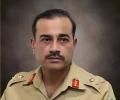
Pakistan's Chief of Army Staff Gen Syed Asim Munir visited Balochistan on Saturday amid clashes in the restive province in which 18 security personnel and 23 terrorists have been killed in the last 24 hours. The army chief was given a comprehensive brief on the prevailing security situation in the province and offered prayers at the funeral of the slain soldiers. He also visited the injured soldiers in the Combined Military Hospital Quetta. The military said the terrorists were killed in different areas of troubled Balochistan in the last 24 hours. Terror attacks have increased since the banned militant Tehreek-e-Taliban Pakistan group broke a fragile ceasefire agreement with the government.

The dead were identified as belonging to Punjab province. No group has claimed responsibility for the attack so far.
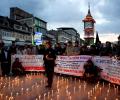
'A terrorist has no religion -- they are nothing but the face of evil. When you offer namaz for a terrorist, attend their funeral, or give them a grave, you affirm that they belong to a religion. That must stop'

Unidentified gunmen on Thursday dead five members of the minority Shia community and two employees of an NGO in the restive Balochistan province of southwest Pakistan, police said.

Senior police officer Aizaz Ghoraya confirmed that security and intelligence officials recovered Shahbaz from the Kuchlak area on the outskirts of Quetta city.
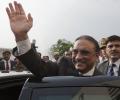
Asif Ali Zardari was overwhelmingly elected as the 14th President of Pakistan on Saturday, becoming the only civilian President of the coup-prone country for a second time.

Deputy superintendent of police Amanullah was among the 15 people killed in the incident
Quetta and other parts of Balochistan have witnessed a series of sectarian attacks over the past few years. Scores of people have died in these incidents.

'Neither India nor others deserve this unsolicited lecture on human rights from a country that has consistently persecuted its ethnic and religious minorities, is an epicenter of terrorism'
Pakistani Parliamentarians were left stunned when a lawmaker led a prayer for slain al-Qaeda chief Osama bin Laden in the National Assembly despite being told by Deputy Speaker Faisal Karim Kundi not to do so.

Thirty-eight people, including three top police officers, were killed and more than 50 injured when a suicide bomber targeted the funeral of a slain policeman in Quetta city of southwest Pakistan on Thursday.

Pakistan's ISI chief Lt Gen Nadeem Ahmed Anjum said on Thursday that Army chief Gen Qamar Javed Bajwa was given a "lucrative offer" in March by the then government amidst the political turmoil, as the powerful top spy launched a veiled attack on ousted premier Imran Khan at an unprecedented press conference.
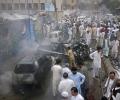
Twenty-five people, including several top police officers, were killed when a suicide bomber targeted the funeral of a slain policeman in Quetta city of southwest Pakistan on Thursday.
"Pakistan has always been fishing in the troubled waters of Jehlum," he added.

Pakistan on Sunday rejected Prime Minister Narendra Modi's assertion that it was exporting terror, saying the remarks were part of a "well thought out vilification campaign" to distract attention from Kashmir.

Less than two days after the Taliban announced the launch of their official website hosting videos, a magazine, and its leaders' interviews and statements, it was taken down on Monday.
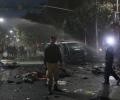
Thirteen people were killed and over 70 others injured in the suicide blast which had targeted police officials.

Awais Ali Shah, a lawyer himself, was abducted last month from Karachi. He was found in Tank.

India's failure to resolve the Kashmir issue and improve relationship with Pakistan has been an "impediment" to India's rise and become the greatest hurdle in it becoming a permanent member of the UN Security Council and the Nuclear Suppliers Group, Pakistan Prime Minister Nawaz Sharif's envoys have claimed.

Ali Haider Gilani, son of ex-premier Gilani, has been recovered from Afghanistan's Ghazni province, Pakistan's Foreign Office said in a statement.

Experts trace the reasons for the 26/11 attacks to the Pakistan's military interest in three key areas: Kashmir, Afghanistan and nuclear armaments.
 © 2026 Rediff.com - Advertise with us - Disclaimer - Privacy Policy - Sitemap - Feedback - About us - Terms of use - Grievances